How to Finish a Project You Abandoned
A gentle, practical way to pick a stalled project back up without drowning in guilt about how long it sat.
The 30-second version
- Treat the pause as normal information, not a verdict on you.
- Spend one short session just finding out where you left off, then stop.
- Shrink the finish line so the project can actually end.
Almost everyone has a half-done project sitting in a closet, a folder, or the back of their mind. The hardest part of coming back is usually not the work itself, it is the heavy feeling attached to it. This guide helps you lower that weight, figure out what is left, and get to a real ending.
Try this, one step at a time
Tick each step as you go. Your progress is saved on this device.
Keep, shrink, or close it?
| If this sounds like you | Best move | What finishing looks like |
|---|---|---|
| You still want the full result and have time for it | Keep it | Pick the next visible action and schedule one session this week |
| You still want it, but the original plan is too big | Shrink it | Rewrite done as a smaller version you can finish in a few sessions |
| You feel more relief than excitement thinking about quitting | Close it | Save the useful parts, donate or store the rest, and call it finished |
| You can't tell yet | Reorient first | Do one 15 minute look-only session, then decide |
Watch
Read more
- The ADHD project graveyard: why we start strong and finish... later (maybe) Tiimo
Explains why projects lose steam once the newness fades and offers ways to make stalled work feel fresh and visible again.
- How to Stop Abandoning Projects Quick and Dirty Tips
Walks through the predictable dip that follows early enthusiasm and why reconnecting with your reason for starting helps you push through it.
- I Am an Excellent Starter. The Trouble Is Finishing. ADDitude
A personal take on finishing with ADHD, with ideas like using reminders as an outside brain and celebrating partial progress.
Tools that help
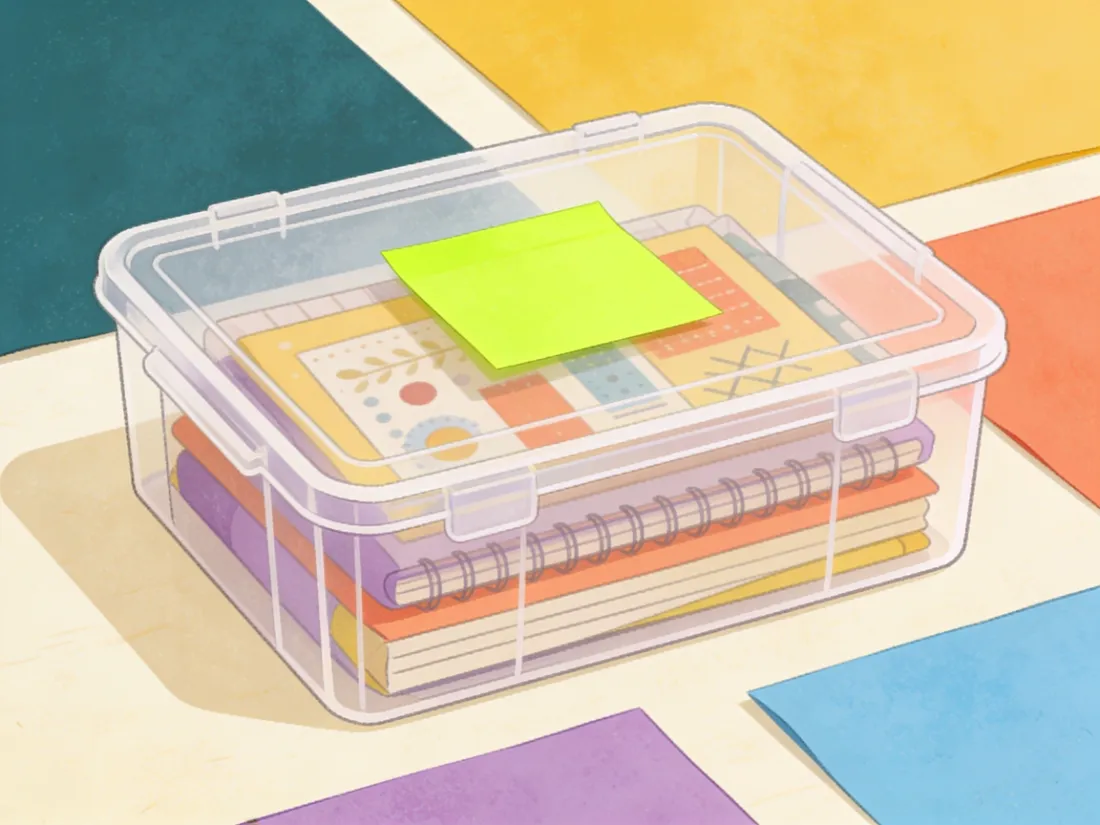
- Clear project bin or labeled tote
Keeps every piece of a physical project together and visible so restarting does not begin with a search.
Find on Amazon - Sticky notes
Write the next action on one and stick it on the project itself so you know exactly where to begin.
Find on Amazon - Visual countdown timer
Makes a short reorientation session feel safe and contained because you can see the end coming.
Find on Amazon

Common questions
Is it okay to decide not to finish?
Yes. Deciding on purpose to close a project, give away the supplies, or keep only the useful parts is a valid ending. What drains you is the open loop, not the choice to stop.
What if I feel too ashamed to even look at it?
Start with the smallest possible contact, like opening the folder and closing it again, or asking a friend to sit with you while you look. Shame tends to shrink once the project becomes concrete again.
Why do I keep stalling in the same place?
The middle of a project is often the least exciting and least clear part. Noticing your usual stall point lets you plan for it with smaller steps, a partner, or a reward. If this pattern is causing real distress, talking with a clinician can help, and this guide is not medical advice.
This guide shares practical ideas, not medical advice. Videos and articles belong to their creators; we link to them because they explain things well.