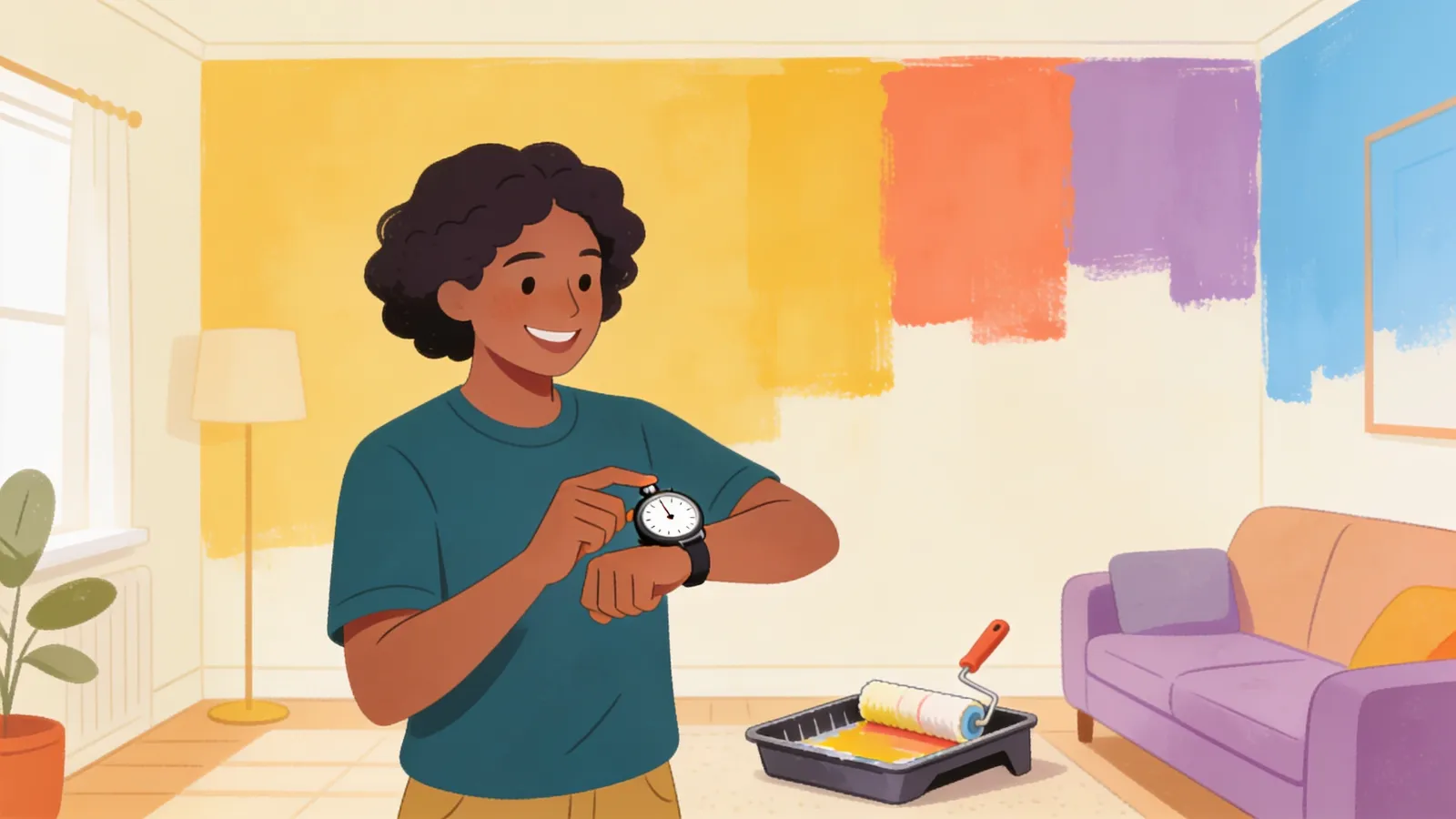
How to Finish a Project: The Step-by-Step Guide for Brains That Stall
A step-by-step system for brains that stall, with a fix for every stage where projects usually die.

Starting is the fun part. Knowing how to finish a project is the hard part, especially when your brain loses interest right around the messy middle. This guide skips the "just try harder" advice and gives you a step-by-step system built for brains that stall, with a fix for every stage where projects usually die. Pick one unfinished thing before you keep reading, because you're going to use it.
The 30-second version
- Decide what "done" looks like before you do anything else.
- Make the next step tiny and keep it where you can see it.
- Lean on timers and other people instead of willpower.
Why Finishing Projects Feels Harder Than Starting Them
New projects feel amazing. There's a plan, a fresh notebook, maybe a new set of supplies. Then week three shows up, the novelty is gone, and the project quietly moves to the pile. If that sounds familiar, you're not broken. Finishing projects asks for a different kind of energy than starting them, and most advice ignores that.
The novelty wears off, and so does the motivation
The beginning of a project is full of small rewards: ideas, shopping, setting things up. The middle has none of that. It's repetitive, a little boring, and the payoff is still far away. That gap is where most projects stall.
"Done" was never defined
A lot of projects don't get abandoned. They just never had a finish line. "Organize the garage" can go on forever. "Clear the left wall and donate two boxes" can't.
A shiny new idea is always waiting
Right when the current project gets hard, a new one starts calling. It's exciting, it's clean and it hasn't disappointed you yet. Write the new idea on a parking-lot list, promise yourself you'll look at it once the current project is done, and get back to work. The idea will keep. Your momentum won't.
It's not a character flaw
If you have ADHD, or suspect you might, this pattern can be stronger. You're also far from alone. According to the CDC, about 6 percent of U.S. adults, roughly 15.5 million people, had a current ADHD diagnosis in 2023, and more than half of them were diagnosed as adults. Plenty of people are figuring out finishing projects later in life, with tools that actually fit their brains.
How to Finish a Project in 7 Steps
Here's the whole system. You don't need to do it perfectly. You just need to do the next step.
Step 1: Define what "done" looks like
Write one sentence that describes the finished project. Make it something you could photograph. "The quilt top is pieced" works. "Make progress on the quilt" doesn't. When people ask me how to finish a project, this is the step I point to first, because everything else hangs on it.
A good definition of done also tells you what you're allowed to skip. If the goal is "the website has a home page, an about page and a contact form," then the blog section is officially not part of this project. Write the skipped parts on a separate "someday" list so your brain stops trying to hold them.

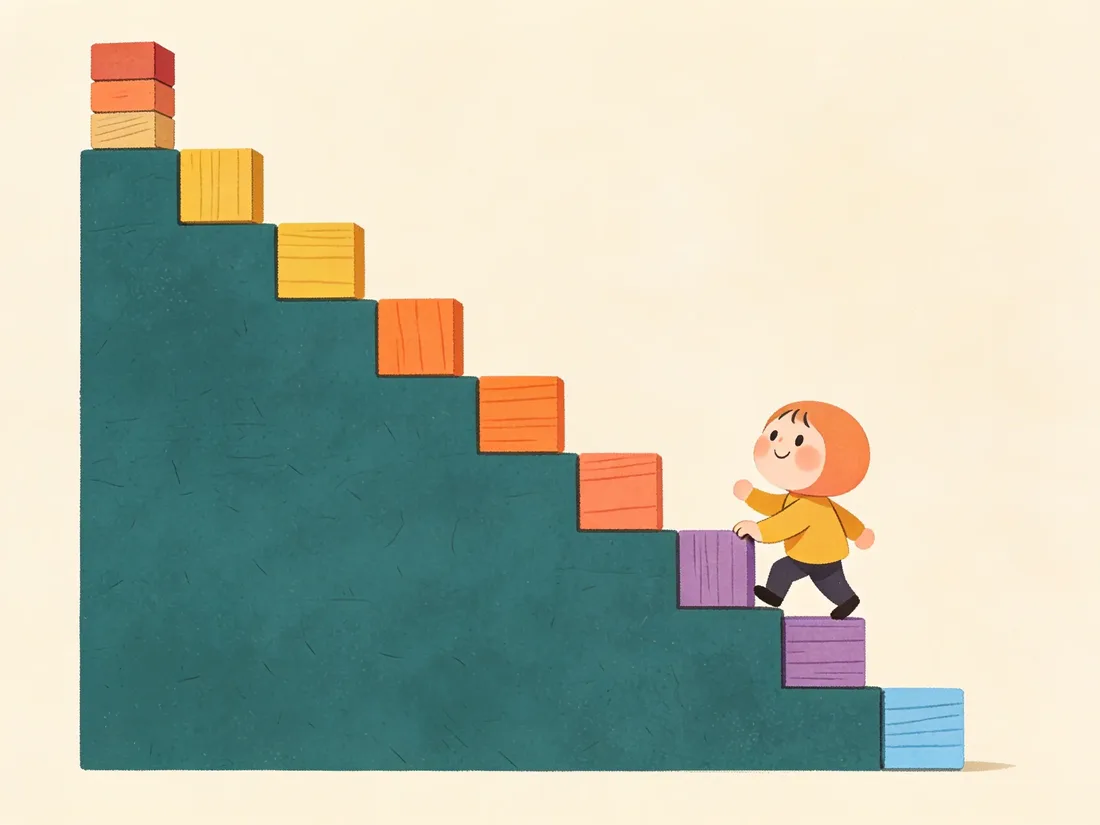
Step 2: Shrink it into tiny steps
Big projects stall because the next step is fuzzy. Break the work into steps small enough that each one takes 10 to 20 minutes. If a step makes you sigh, it's still too big. Our guide on how to break a big project into tiny steps walks through it with examples.
For example, "repaint the bathroom" becomes: pick a color, buy one sample pot, test a patch, buy the paint, tape the trim, paint one wall. Each of those is a win you can check off, and each one is small enough to do on a tired Tuesday.
Step 3: Write an if-then plan
Instead of "I'll work on it this week," write "If it's Tuesday after dinner, then I'll sand one drawer." This sounds too simple to matter, but it's one of the best-studied tricks in psychology. A meta-analysis by Gollwitzer and Sheeran pulled together 94 independent tests and found that these if-then plans had a medium-to-large effect on whether people reached their goals.
The trick works because it removes a decision. You don't have to wake up and figure out when you'll work on the project. Past you already decided. Write two or three if-then plans for the coming week and put them in your calendar or on the fridge.
Step 4: Keep the next step where you can see it
Out of sight really can mean out of mind. Put the project, or a sticky note with the next step, somewhere you'll walk past every day. More ideas are in our guide to making your tasks visible.
Some people like a whiteboard by the door. Others leave the sewing machine set up on the dining table instead of packing it away. It looks messy, but a project you can see is a project you'll touch, and every time you touch it, the finish line gets closer.
Step 5: Work in short, timed sprints
A timer turns "work on the project" into "work for 15 minutes." That's a lot easier to say yes to. Try the Pomodoro technique for ADHD brains, or set a visual timer so you can see time moving.
Start shorter than you think you need to. Ten minutes a day, five days a week, is almost an hour of progress, and it's far easier to protect than a mythical free Saturday. When the timer goes off, stop, even if you're on a roll, and leave a note about what comes next. That note makes tomorrow's start effortless.
Step 6: Bring in a body double
Working next to another person, in the room or on a video call, makes it easier to start and harder to drift. It's one of the most useful habits for finishing projects that keep stalling. Here's how to use body doubling to get things done.
Your body double doesn't need to help or even care about your project. A friend folding laundry on a video call works. So does a coffee shop. The point is a gentle, friendly witness who makes it a little awkward to open your phone and scroll.

Step 7: Call it done
This is the step perfectionists skip. When the project matches your one-sentence definition from Step 1, it's finished. Stop polishing. If that's hard for you, read how to finish when perfectionism keeps you stuck. Then celebrate, even if it's just telling one person. That's how to complete a project and actually feel it.
Mark the finish in a way you'll remember: a photo, a note in your planner, a text to the friend who's been cheering you on. Your brain learns from endings. The more clearly you mark them, the more it starts to believe you're someone who finishes things.
Where Projects Stall: A Stage-by-Stage Fix
Most projects don't fail all at once. They stall at a specific stage. Find yours in the table and start there.
| Stage | What it feels like | What's really happening | Try this | Guide |
|---|---|---|---|---|
| Starting | "I'll do it when I have a free weekend." | The first step is too big or too vague | Do a 5-minute version of the first step today | How to Start When You Can't Start |
| Planning | Endless research, no action | Planning feels productive without the risk of doing | Cap planning at one page, then start Step 1 | Break a Big Project Into Tiny Steps |
| Messy middle | Bored, distracted, tempted by a new project | The novelty is gone and rewards are far away | Timed sprints plus a body double | Body Doubling |
| Last 10 percent | "It's basically done." | Finishing means judging the result | List the exact last 3 tasks and do one now | This guide, Step 7 |
| Calling it done | One more tweak, forever | Perfectionism is moving the finish line | Compare it to your Step 1 sentence. Match? Done. | Done Is Better Than Perfect |
A Real-Life Example: The Quilt That Sat for a Year
Here's what the seven steps look like on a real project. Say you started a quilt last fall, cut half the fabric and stopped. It lives in a bin in the closet, and every time you see the bin you feel a little bad.
- Done: "The quilt top is pieced." Quilting and binding are a separate project, on the someday list.
- Tiny steps: finish cutting one color, sew one row, press one row. Twelve rows means twelve small wins.
- If-then plan: "If it's Sunday after breakfast, then I'll sew one row."
The bin moves out of the closet and onto a chair in the living room, where you see it every day. Every Sunday you set a 20-minute timer, call a friend who's knitting, and sew one row while you talk. Twelve Sundays later, the top is done. You photograph it, text the photo to your friend, and that's the finish. No marathon weekend, no guilt spiral, just a dozen short sessions.
How to Complete a Project You Already Abandoned
Maybe your project isn't stalled. Maybe it's been sitting in a closet for two years. Good news: how to complete a project you walked away from is mostly the same process, with one extra step at the start. Look at it honestly and decide whether you still want it finished. If yes, write a new "done" sentence that fits the person you are now, not the person who started it.
Skip the guilt. It doesn't help you finish anything. Our full guide on how to finish a project you abandoned covers how to restart without shame, and how to decide when it's okay to let something go.
Finish, pause or let go
Not every abandoned project deserves a comeback. Sort each one into three piles. Finish: you still want it and could do it in the next three months. Pause: you want it, but not now, so it gets a date to revisit. Let go: you've outgrown it, so donate the supplies and enjoy the extra space. Letting go on purpose is a finish too.
How to Actually Finish a Project When You're 90 Percent Done
The last stretch is weirdly hard. The project is almost done, which means it's almost time to be judged on it. So we stall. If you're wondering how to actually finish a project that's sitting at 90 percent, make the remaining work painfully specific. Write the last three tasks on a sticky note, put it on the project, and do one of them today.
Then set a finish date and tell someone. A deadline that only lives in your head is easy to move. That's really how to actually finish a project: make the ending concrete, visible and a little bit public.
Tools That Make Finishing Projects Easier
You don't need special gear, but the right tool can take some of the load off your brain. A few that help with finishing projects:
- A visual timer, so you can see time passing. See visual timers for time blindness.
- A planner you'll actually open. Here's how to choose a planner that works for ADHD.
- A free AI task breaker for when the next step feels foggy. See using free AI tools to break down tasks.
Pick one. Adding five new tools is its own kind of procrastination, and research suggests procrastination is common enough without our help: psychologist Piers Steel called it "a prevalent and pernicious form of self-regulatory failure" and noted it appears to be growing.

Common questions
How do you finish a project when you've lost motivation?
Stop waiting for motivation to come back. Shrink the next step until it takes 10 minutes, set a timer and, if you can, work next to someone. Motivation usually shows up after you start, not before.
How do you complete a project you abandoned months ago?
Decide whether you still want it done, write a fresh definition of "done," and pick one small step to do today. Don't try to make up for lost time in one session.
Why do I start projects and never finish them?
Usually because the start is rewarding and the middle isn't, and because "done" was never clearly defined. ADHD can make this pattern stronger, but anyone can get stuck there.
How long should it take to finish a project?
Longer than you think, and that's okay. Estimate, then add 50 percent. A slow finish still counts as a finish.
Should I start a new project before I finish the old one?
Usually not. Put the new idea on a parking-lot list and give yourself permission to start it once the current project hits its finish line. If you truly can't wait, pause the old project on purpose with a restart date instead of letting it quietly drift.
Your Next Step
Grab the project you picked at the top of this page. Write your one-sentence definition of done, then set a timer for 10 minutes and do the smallest next step. That's it. That's the whole secret of how to finish a project: one small, visible step at a time.
Sources
- Gollwitzer, P. M., & Sheeran, P. (2006). Implementation intentions and goal achievement: A meta-analysis of effects and processes. Advances in Experimental Social Psychology, 38, 69-119.
- Staley, B. S., Robinson, L. R., Claussen, A. H., et al. (2024). Attention-deficit/hyperactivity disorder diagnosis, treatment, and telehealth use in adults. MMWR, 73(40).
- Steel, P. (2007). The nature of procrastination: A meta-analytic and theoretical review of quintessential self-regulatory failure. Psychological Bulletin, 133(1), 65-94.
This guide shares practical ideas, not medical advice. Linked research and articles belong to their authors; we link to them because they explain things well.